
'Ancestral identities' moved with the stones.
Read More
'Ancestral identities' moved with the stones.

Because of its ability to repair DNA damage or destroy cancer cells, an antioxidant found in green tea can increase levels of p53, a natural anti-cancer protein.
This study published in Nature Communications details the direct interaction between p53 and the green tea compound, epigallocatechin gallate (EGCG).
Mutations in p53 are found in more than 50% of human cancers, while EGCG is the main antioxidant in green tea. And there is a previously unknown direct interaction between the two, which points to a new path for the development of anti-cancer drugs.
P53 has several well-known anticancer functions, including stopping cell growth to allow DNA repair, activating DNA repair, and initiating programmed cell death, called apoptosis, if the DNA damage cannot be repaired.
For its part, EGCG is a natural antioxidant, meaning it helps undo the almost constant damage caused by oxygen metabolism.
The team of researchers discovered that the interaction between EGCG and p53 preserves the protein from degradation.
We already knew that, among their many biological activities, the predominant polyphenols in green tea (EGCG, EGC, ECG and EC) and the theaflavins and thearubigins present in black tea have antioxidant properties. These chemicals, especially EGCG and ECG, have considerable free radical scavenging activity, and can protect cells from suffer DNA damage caused by reactive oxygen species.
–
The news
An antioxidant found in green tea may increase levels of p53, a natural anti-cancer protein
was originally published in
Xataka Science
by
Sergio Parra
.
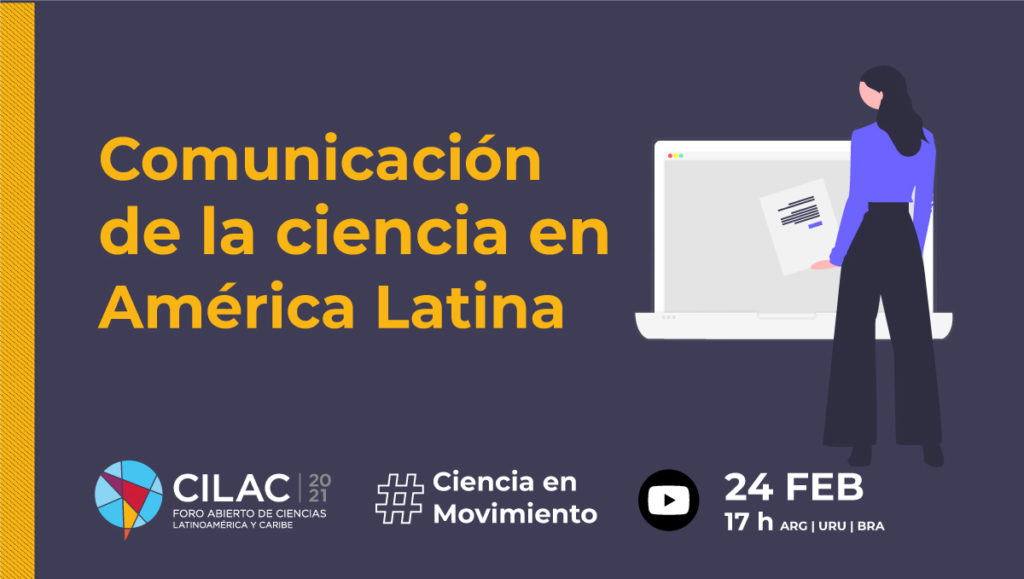
Don't miss the new CILAC virtual event on February 24 at 5 p.m. (URU, ARG, BRA) Addressing the problems of the current context require participation...

Stretchy enough to be worn as a ring, bracelet or any other accessory that touches the skin, this new low-cost wearable device transforms the human body into a biological battery.
Has been developed by researchers at the University of Colorado at Boulder, and can generate about 1 volt of energy for every square centimeter of skin space.
The secret of its elasticity and ease of repair is in its base material: an elastic material called polyimine. If it breaks, for example, you can put the broken ends together and they will seal again in just a few minutes.
This also allows it to be completely recyclable, making it a cleaner alternative to traditional electronic devices: in a special solution that will separate the electronic components and dissolve the polyimine base; Each and every one of those ingredients can be reused.
Although the voltage it provides is very low, it could be enough to power electronic devices such as watches or activity bracelets.
It also takes advantage of a person's natural heat, using thermoelectric generators. to convert internal body temperature into electricity.
–
The news
This ring-shaped device transforms the human body into a biological battery
was originally published in
Xataka Science
by
Sergio Parra
.

The Marsoulas conch It is the oldest wind instrument of its kind. This large ornate seashell was discovered in the Marsoulas Cave, between Haute-Garonne and Ariège, in 1897.
According to carbon 14 dating of the cave, carried out on a piece of charcoal and a fragment of bear bone from the same archaeological level as the shell, it gave a date of around 18,000 years. And now we can hear what it sounded like.
The shell has been decorated with a red pigment (hematite), characteristic of the Marsoulas Cave, which indicates its status as a symbolic object. The tip of the shell is not accidentally broken, forming an opening 3.5 centimeters in diameter. Since the opening was irregular and covered by an organic coating, the researchers assume that it also carried a mouthpiece.
To find out what this instrument could sound like, researchers from the National Center for Scientific Research (CNRS), the Toulouse Museum, the Toulouse-Jean Jaurès University and the Musée du quai Branly-Jacques-Chirac hired a trumpeter who managed to do ring three sounds with it close to the notes C, C sharp and D. It you can listen below:
To date, flutes have only been discovered in earlier contexts of the European Upper Paleolithic and the conch shells found outside Europe are much more recent.
Here you have the 3D model of the shell to explore it at your leisure:
<p style="font-size: 13px; font-weight: normal; margin: 5px; color: #4A4A4A;">
    <a href="https://sketchfab.com/3d-models/triton-700k-0bddff3405144c7b8f91f902e28bcc9b?utm_medium=embed&utm_source=website&utm_campaign=share-popup" target="_blank" style="font-weight: bold; color: #1CAAD9;">Triton 700k</a>
    by <a href="https://sketchfab.com/Frannd31?utm_medium=embed&utm_source=website&utm_campaign=share-popup" target="_blank" style="font-weight: bold; color: #1CAAD9;">Frannd31</a>
    on <a href="https://sketchfab.com?utm_medium=embed&utm_source=website&utm_campaign=share-popup" target="_blank" style="font-weight: bold; color: #1CAAD9;">sketchfab</a>
</p>
–
The news
We can now hear the oldest wind instrument sound: 18,000 years old
was originally published in
Xataka Science
by
Sergio Parra
.
What could possibly go wrong?
Trauma can affect the brain for years to come.
2024, CILAC Forum. All rights reserved.
UNESCO Montevideo Office.
