
Four mountains. One big caldera?
Read More
Four mountains. One big caldera?

He Jackobshavn Isbrae glacier It reached a speed of 45 meters per day, as recorded in August 2004. Thus, it is the glacier that has moved at the fastest speed, as far as we know.
The speed was attributed to an influx of warm seawater into Disko Bay, on the west coast of Goenland.
Since then, the glacier has slowed considerably, especially after a very cold period in 2013.

The curious thing is that it is very likely that the Titanic sank when it collided with an iceberg that broke off from this glacier that holds the speed record. It's not strange something like that: The Jakobshavn Glacier drains 6.5% of the Greenland ice sheet and produces about 10% of all Greenland icebergs. Approximately 35 billion tons of icebergs break off from the fjord each year.
Still, it was not the largest iceberg ever documented that stood in the path of the largest ship. That title is held by another: on November 12, 1956, the crew of the USS Glacier sighted a tabular iceberg with an estimated area of more than 31,000 square kilometers, that is, more than the surface of Belgium.
The iceberg measured 335 kilometers long and 97 kilometers wide. They spotted it west of Scott Island, in the Antarctic Ocean.
–
The news
It is likely that the Titanic sank after colliding with an iceberg that broke off from the fastest glacier: 45 meters per day
was originally published in
Xataka Science
by
Sergio Parra
.

Aptera has opened the possibility of placing orders for a solar electric vehicle that can be equipped with batteries that allow a range of up to 1,600 kilometers. He Aptera solar EV provides up to 72 kilometers of autonomy per day without needing to be plugged in.
Its manufacturers claim that its 180 small solar panels, which make up an area of more than three square meters, will collect enough energy to make all this possible.
With a vaguely aeronautical-looking two-seat cabin, the Aptera has an 'unheard of' drag coefficient of just 0.13. Compare that to, say, the Concept V's 'incredibly low' 0.24 drag coefficientolkswagen ID Space Vizzion. It is also completely constructed of carbon/kevlar/flax composites, which makes it very light and resistant.
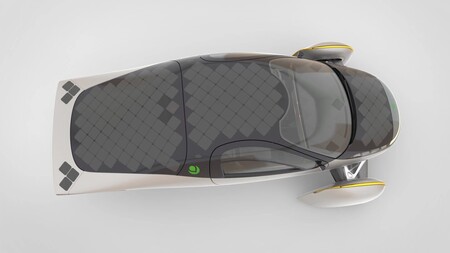
As for the engine, there are multiple options available, with liquid-cooled electric motors on either the two front wheels or all three.
Battery sizes will also vary, so a range of 400, 644, 965 km or up to 1600 km. To get an idea of how efficient this three-wheeled vehicle is, the Tesla Model S P100D had a radical increase in efficiency this year and can now reach 650 km with a battery of the same size.

To be fair, Tesla has actually already put its cars on the road, and Aptera has only reached the production prototype stage so far. But it is ready to accept reservations for the 'Paradigm' and 'Paradigm+' special edition vehicles that will be produced in 2021.
–
The news
This new electric vehicle is now capable of reaching 1600 kilometers of autonomy
was originally published in
Xataka Science
by
Sergio Parra
.
A remarkable collection of 12,000-year-old art.
2024, CILAC Forum. All rights reserved.
UNESCO Montevideo Office.