There are at least 24 planets more habitable than Earth but they are more than 100 light years away

By portal-3

Hay al menos 24 planetas más habitables que la Tierra pero están a más de 100 años luz de distancia

According to A study led by Washington State University (WSU) scientist Dirk Schulze-Makuch, recently published in the Astrobiology magazine, at least 24 planets outside our solar system They meet some conditions more suitable for life than the Earth itself.

Some of its stars may be even better than our sun, but all of them are very far away: more than 100 light years away.

Superhabitable planets

'Superhabitable' planets are older, slightly larger, slightly warmer and possibly wetter than Earth. Life could also thrive more easily on planets orbiting more slowly changing stars with longer lifespans than our sun: many stars similar to our sun, called G stars, They could run out of fuel before complex life develops.

The Earth is about 4.5 billion years old, but researchers maintain that the sweet spot for life is a planet that is between 5 billion and 8 billion years old.

Press release of @WSUPullman on our “superhabitable world” paper in @Astrobiology_jn: https://t.co/sVbsPTcVlZ. We identify 24 #exoplanets & candidates that could be more suitable for life than Earth. Free PDF: https://t.co/j0dpUmOlEu@extreme_microbe @MPSGoettingen @uniGoettingen pic.twitter.com/kgggjbYKeb

— René Heller (@DrReneHeller) October 5, 2020

Habitability does not mean that these planets definitely have life, simply the conditions that would be conducive to life.

At least two dozen candidates have been located. All in all, none of them meet all the criteria for superhabitable planets, only one has four of the critical characteristics. In addition, it is far to travel there, but we could improve our technology to study them better, as explained Schulze-Makuch, professor at WSU and the Technical University of Berlin:

With the arrival of the next space telescopes, we will obtain more information, so it is important to select some targets. We need to focus on certain planets that have the most promising conditions for complex life. However, we have to be careful not to get stuck looking for a second Earth because there could be planets that could be more suitable for life than ours.


The news

There are at least 24 planets more habitable than Earth but they are more than 100 light years away

was originally published in

Xataka Science

by
Sergio Parra

.

Read More

These human neurons found are 2,000 years old and are vitrified because they are from a victim of the Vesuvius eruption

By portal-3

Estas neuronas humanas encontradas tienen 2.000 años y está vitrificadas porque son de una víctima de la erupción del Vesubio

A forensic anthropologist investigation team Pier Paolo Petrone, director of the Laboratory of Human Osteobiology and Forensic Anthropology of the Departmental Section of Forensic Medicine of the University of Naples Federico II has made an extraordinary discovery.

Nothing less than vitrified neurons of a victim of Vesuvius in 79 AD that buried Pompeii, Herculaneum and the entire surrounding area in ash.

Consequences of the eruption

Founded in the 7th century BC. C., The city of Pompeii was well known because the patricians had it as a vacation spot. One peaceful afternoon like any other, August 24, 79, a distant thunderclap was heard and the ground shook. Vesuvius was beginning to spit out materials with a temperature of more than a thousand degrees Celsius. It is estimated that the eruption was about five hundred times greater than that of the bomb dropped on Hiroshima on August 6, 1945. The lava reached the city at a speed of 110 kilometers per hour, with no possibility of escape, and plunged Pompeii into forgotten for centuries. It was a tragedy, but, on the other hand, that process preserved the city like an insect encased in amber.

f

Therefore, thanks to that eruption, using scanning electron microscopy (SEM) and advanced image processing tools, Petrone, together with a team of archaeologists, geologists, biologists, forensics, neurogeneticists and mathematicians, was able for the first time to show the presence of neuronal cells in the vitrified remains of the brain and spinal cord, which discovered during recent investigations at the archaeological site of Herculaneum.

The extraordinary discovery of perfectly preserved neuronal structures was made possible by converting human tissue to glass. The unique vitrification process induced by the eruption froze the cellular structures of this victim's central nervous system, keeping them intact to this day.

Abce7a08 99f2 4819 9121 A588e82426ac

The study also analyzed the data of some proteins already identified by the researchers in a work published last January by the New England Journal of Medicine.

That eruption, curiously, has not only preserved neurons, but also swear words: the first of which we have evidence in history, as I explain in the book Mecagüen! Swearing, insults and blasphemies.

¡Mecagüen! Palabrotas, insultos y blasfemias (Vox - Lengua Española)

Mecagüen! Swearing, insults and blasphemies (Vox – Spanish Language)

Thanks to the Vesuvius tragedy, thousands of graffiti have been preserved and a significant percentage of them are obscene. In a public latrine,
for example, it reads "Encolpius hic bene cacavit" ('Encolpius shit well here'). At the entrance of a bakery, a relief of a penis was found accompanied by the following message: "Hic habitat congratulations" ('happiness is found here'). comments and recommendations ("Sucesa, the slave, has a good fuck"), leaving aside the rich synonymy to refer to prostitutes, such as meretrix ('whore'), concubine ('woman with whom one shares another bed or cubicle, without being married') or culiola (from the Latin culus, 'ass', to specify that it offered anal intercourse).


The news

These human neurons found are 2,000 years old and are vitrified because they are from a victim of the Vesuvius eruption

was originally published in

Xataka Science

by
Sergio Parra

.

Read More

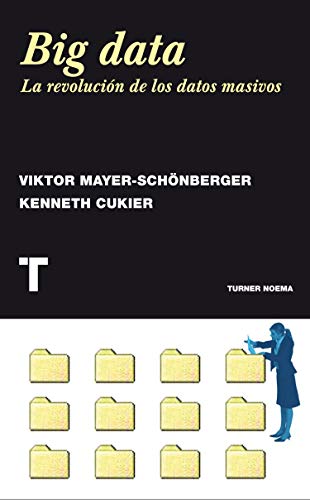
Books that inspire us: 'Big data: the massive data revolution', by Viktor Mayer-Schönberger and Kenneth Cukier

By portal-3

Libros que nos inspiran: ‘Big data: la revolución de los datos masivos’, de Viktor Mayer-Schönberger y Kenneth Cukier

To begin to prepare the ground for what is coming to us (unstoppable and imminent), that is, to begin to assimilate the social, cultural and technological implications of Data mining (like putting correlation above causation), here comes this book: Big Data, written in four hands by Viktor Mayer-Schönberger (Professor of Internet Regulation and Management at the Internet Institute of Oxford University) and Kenneth Cukier (data editor of The Economist magazine).

Data, data and data

We are, therefore, faced with a text that, despite being a bit redundant or digressive, In general terms it should be called amazing. After reading it, I'm not exaggerating, I felt a little like Neo in the movie Matrix, observing everything as numbers and symbols instead of atoms. Because Big data invites you not only to record reality in a different way, but also to do so at a higher resolution than that obtained with eyes, telescopes, microscopes and even many scientific experiments.

Knowing so much, however, has its price: not knowing how we know it or how exactly the discovered phenomenon occurs. We simply know it, diluting the causal link in favor of the correlational link. The paradigm of this change is Google Flu Trends, which allows us to know before any other organization where a flu epidemic will occur simply by exploring where flu symptoms are searched through Google. Patterns and correlations over causalities. Scientific trials that pursue causality are expensive and complex, so a great alternative to them could be big data.

Big Data - La Revolucion De Los Datos Masivos (Noema)

Big Data – The Revolution of Massive Data (Noema)

That is just the tip of the iceberg of all the information that the exploration of massive data will offer us, and also the datafication of reality, that is, the transformation of everyday objects into data that adds to the ocean of massive data that already exists. It houses the Internet as a result of our digital footprints through social networks or smartphones.

For example, incorporating sensors into all the objects we buy to know when they are purchased, how they are moved, when they are consumed, etc. Imagine a car seat equipped this way: Calculating the way you put your butt in the seat to prevent your car from being stolen.

All of this could seem like an Orwellian nightmare in which the great eye will strip us of intimacy. But that is another issue that we will have to manage later.. Furthermore, the true value of big data is not in analyzing a user individually, but rather in exploring a collectivity. Such an abundance of data overshadows the individual. It doesn't matter if you like to consume porn, but rather which neighborhood consumes the most porn and what type.

z


The news

Books that inspire us: 'Big data: the massive data revolution', by Viktor Mayer-Schönberger and Kenneth Cukier

was originally published in

Xataka Science

by
Sergio Parra

.

Read More